


- Educational Activities
- Jul 25
2025-03-17
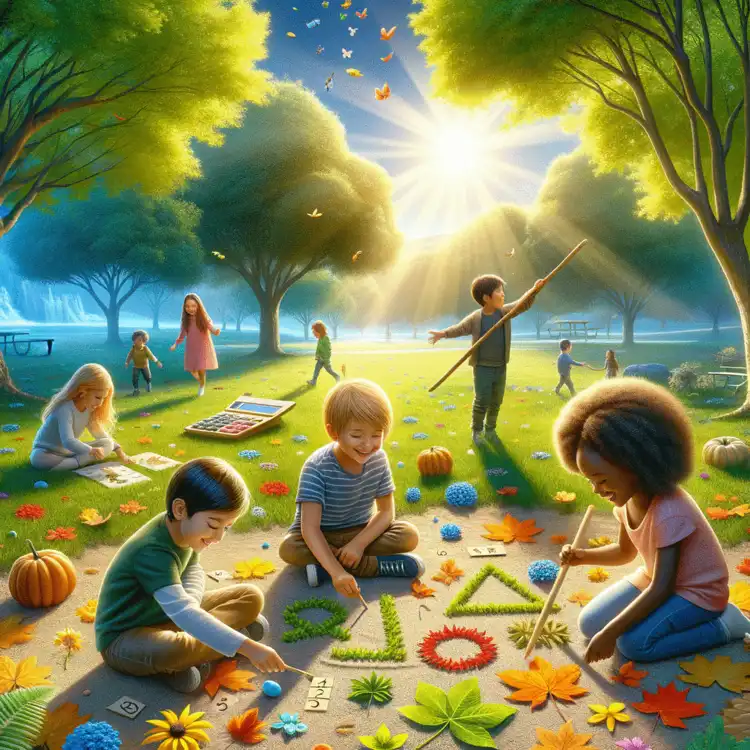
What if your child's next math lesson took place under a canopy of trees? Engaging children with nature opens up a world where math becomes a fun, interactive adventure. By exploring the great outdoors, kids can develop essential skills while enjoying the beauty of their surroundings.
Outdoor math activities offer numerous advantages for children's development and learning. Below is a summary of the key benefits illustrated in a side-by-side comparison.
Counting with nature is an exciting way to combine the beauty of the outdoors with essential math skills. At Tots Tutor, we believe that learning should be a joyful experience, especially for toddlers. By engaging with nature, children can explore counting, shapes, and patterns in a fun, hands-on way, making math feel less intimidating and more approachable.
TIP: Make outdoor activities part of your routine to enjoy nature and fresh air.
When we take learning outside, it opens up a world of opportunities! Nature offers countless examples of mathematical concepts, from counting leaves to measuring the height of trees. This method not only enhances their understanding of numbers but also fosters a deep appreciation for the environment.
Outdoor math exploration provides various benefits for children’s development. Here are some key advantages:
As children interact with their environment, they experience math concepts in real-life situations. This practical approach allows them to see the relevance of math in their everyday lives, which can boost their confidence and excitement about learning.
Nature is a wonderful teacher! It naturally encourages mathematical thinking in various ways. For example, when toddlers count flowers or sort rocks by size, they practice essential counting and sorting skills. Check out these fine motor skills activities that can complement outdoor math learning, helping children develop crucial skills while exploring their surroundings. These activities promote problem-solving and critical thinking, vital components of math education.
Additionally, nature often presents patterns, shapes, and symmetry, which can be exciting to explore. From the spirals in sunflower seeds to the symmetry of butterfly wings, kids can discover math all around them!
At Tots Tutor, we understand that math and the environment go hand in hand. Nature-based learning emphasizes this connection, allowing kids to make discoveries about both math and the world around them. By incorporating natural elements into math activities, children can see how math is integrated into their lives.
For instance, when we teach counting through natural materials, it deepens their understanding and appreciation for nature. They learn that math is not just numbers on a page but a part of their everyday experiences!
Incorporating nature into our learning activities creates a rich, engaging experience that inspires curiosity and creativity in young learners. By embracing this approach, we help children see the world through a mathematical lens!
As we dive deeper into the benefits of outdoor math exploration, we want to hear from you! How do you feel about incorporating nature into math learning for your children or students?

Exploring math in an outdoor setting can have lasting effects on a child's attitude towards the subject. When children engage with math through nature-based activities, they often find it less intimidating and more enjoyable. This positive experience can transform their perception of math as a fun challenge rather than a stressful subject!
Additionally, outdoor exploration fosters a sense of curiosity. Kids learn to ask questions and seek answers, which is a fundamental aspect of mathematical thinking. By associating math with the great outdoors, they develop a lifelong appreciation for learning and problem-solving.
Nature has a unique way of inspiring kids! When they count leaves, measure sticks, or collect stones, they see math as a natural part of their world. This connection helps them realize that math isn't just about numbers on a page but is also about real-life experiences.
Furthermore, outdoor activities can reduce anxiety associated with math. By creating a playful environment, children become more confident in their skills. They feel empowered to explore their surroundings, making mistakes and learning from them in a safe space.
Staying actively involved with outdoor math activities can lead to significant benefits over time. Children who regularly engage with nature often develop strong critical thinking and analytical skills. They learn to approach problems from various angles, which is essential not just in math, but in all areas of learning. For more ideas on sparking curiosity, consider these enchanting science activities for kids, which can further enhance their problem-solving skills.
Moreover, continued outdoor exploration strengthens their connection to the environment. As they measure, count, and observe, they become stewards of nature, understanding its value and intricacies. This dual focus on math and the environment aligns perfectly with our mission at Tots Tutor!
Experiential learning, especially in nature, encourages children to engage deeply with the material. When they can touch, see, and manipulate natural elements, the concepts become more relatable. This hands-on experience can solidify their understanding far better than traditional classroom settings. Consider complementing this hands-on approach with easy toddler learning activities for a holistic educational experience
Additionally, long-term exposure to outdoor learning experiences promotes resilience. Kids learn that mistakes are part of the learning process. By navigating challenges in nature, they become more adaptable and better equipped to handle future academic obstacles.
Here are some frequently asked questions about outdoor math exploration:
Outdoor math exploration can increase children's engagement and enthusiasm for learning, enhance observational skills, and provide real-life contexts for mathematical concepts. It also helps reduce math anxiety and fosters a lifelong appreciation for learning.
Nature encourages mathematical thinking by providing opportunities for children to count flowers, sort rocks, observe patterns and shapes, and measure plants and distances. These activities promote problem-solving and critical thinking skills.
Engaging with math in an outdoor setting can have lasting effects on a child's attitude towards the subject, fostering a sense of curiosity and a positive association with learning. It also strengthens their connection to the environment and promotes resilience.
Parents can encourage outdoor math activities by counting natural objects, measuring distances, and creating simple math games during family outings. These activities make math a fun part of daily life and help children see its value beyond the classroom.
Educators can incorporate nature walks into lesson plans, use outdoor spaces for hands-on math experiments, and design collaborative math projects that involve the community. Partnering with local organizations and inviting experts can also enhance outdoor math education.
Engaging parents and educators is vital for promoting outdoor math exploration. At Tots Tutor, we believe that collaboration can enhance the learning experience. By working together, we can inspire kids to explore math in exciting new ways!
As a parent, you play a crucial role in fostering your child's learning environment. Here are some simple ways to encourage outdoor math activities:
By taking math outside, you can make it a fun part of daily life! This can help your child see the value of math beyond the classroom.
Educators can also benefit from creative strategies for teaching math outdoors. Here are some innovative approaches to consider:
By bringing math into nature, educators can engage students in ways that are memorable and impactful!
Collaboration with local organizations can enhance outdoor math education. Reach out to community groups that focus on nature or education. Here are a few ideas:
Working together, we can create enriching experiences that teach math in enjoyable, hands-on ways!
Here is a quick recap of the important points discussed in the article:
For more inspiration, check out these outdoor learning adventures for kids to continue the learning journey.